Custom Iron Work for Residential & Commercial Projects.
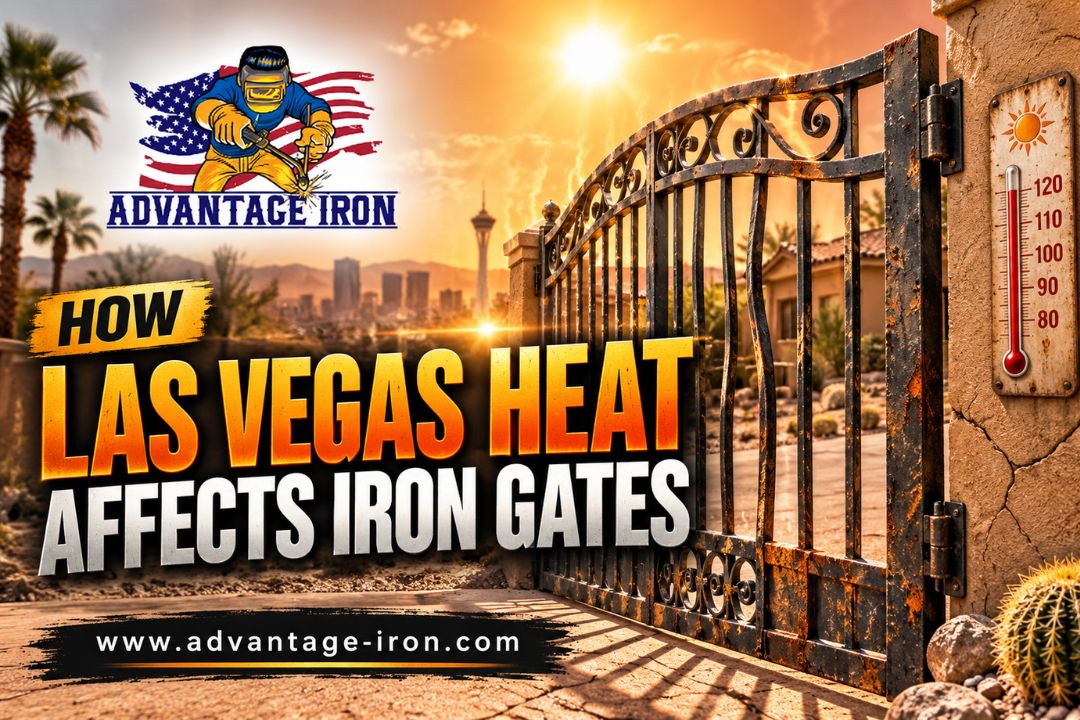
How Las Vegas Heat Affects Iron Gates and Fences
Quick Summary:- Las Vegas heat rarely damages a properly fabricated iron gate by itself. The bigger risks are repeated expansion and contraction, UV deterioration of protective finishes, dust buildup, dry hinges, misalignment, and moisture reaching exposed steel. Regular cleaning, lubrication, coating inspections, and timely repairs can prevent larger structural and corrosion problems.
Las Vegas heat can make iron gates extremely hot, cause small amounts of thermal movement, dry out lubricants, fade protective finishes, and increase stress on hinges, welds, posts, and automatic gate components.
However, heat alone does not normally destroy a professionally fabricated iron gate. Most serious problems develop when poor installation, damaged coatings, inadequate clearances, moisture, and neglected maintenance are combined with years of desert exposure.
Las Vegas has experienced temperatures as high as 117°F, while direct sunlight can make dark metal surfaces considerably hotter than the surrounding air. That makes climate-appropriate fabrication and routine maintenance essential for iron gates in Las Vegas.
What Does Extreme Heat Actually Do to Iron Gates?
It Causes Expansion and Contraction
Metal expands as it heats and contracts as it cools. The daily movement is usually small and should not harm a properly designed gate.
Problems arise when a gate has:
- Insufficient clearance
- Overly rigid connections
- Weak or undersized posts
- Poorly positioned hinges
- Long panels without movement allowance
- Existing alignment problems
A gate may open correctly in the morning but rub, drag, or become harder to latch during the hottest part of the afternoon. Repeated movement can also place stress on mounting points, hinges, welds, and fasteners.
It Makes Iron Surfaces Dangerously Hot
Dark-colored wrought iron gates in Las Vegas absorb significant solar energy. Handles, latches, rails, and decorative components can become uncomfortable or unsafe to touch during summer afternoons.
This surface heat does not necessarily mean the gate is structurally damaged. It does mean homeowners should be careful around frequently touched components, especially when children or pets use the area.
It Breaks Down Weak or Damaged Finishes
UV radiation does not normally damage the underlying steel directly. It affects the paint, clear coat, sealant, or other protective finish covering it.
Over time, an unsuitable or poorly applied coating may:
- Fade
- Lose gloss
- Become chalky
- Bubble or peel
- Crack around welds
- Separate from improperly prepared metal
Once the protective finish opens, moisture can reach the metal underneath.
Does Las Vegas Heat Cause Iron Gates to Rust?
Heat by itself does not cause rust. Iron needs moisture and oxygen to corrode.
The Las Vegas climate is dry, but iron gates still encounter moisture from:
- Lawn sprinklers
- Pool water
- Irrigation overspray
- Monsoon rain
- Pressure washing
- Morning condensation
- Water collecting inside hollow sections
Heat and sunlight can weaken an already poor coating. When water later reaches the exposed metal, corrosion begins.
Common early signs include orange stains, bubbling paint, rough spots around welds, and discoloration near the bottom of gate posts.
Effective rust prevention for iron gates requires repairing coating damage before rust spreads beneath the surrounding finish.
How Heat Affects Hinges, Latches, and Gate Alignment
Large driveway gates place substantial weight on their hinges and supporting posts. Summer heat can expose existing installation weaknesses rather than creating them from nothing.
Watch for:
- Hinges that squeak or bind
- A gate that starts dragging
- Uneven gaps between gate leaves
- A latch that no longer lines up
- Loose anchor bolts
- Cracks near hinge welds
- Posts that lean or move
- Double gates that meet unevenly
A dragging gate should not simply be forced open. Continuing to operate it can increase stress on the hinges, frame, welds, and automatic operator.
How Heat Affects Automatic Iron Gates
Automatic gates have additional parts that require attention, including motors, circuit boards, batteries, sensors, wiring, keypads, and access-control equipment.
Extreme heat may contribute to:
- Reduced battery performance
- Overheated enclosures
- Dry or contaminated moving parts
- Sensor alignment problems
- Wiring insulation deterioration
- Motor strain caused by a dragging gate
- Intermittent opening or closing
The operator should match the gate’s size, weight, wind exposure, and expected daily use. A motor cannot compensate for poor alignment or damaged hinges.
If an automatic gate slows down, reverses unexpectedly, produces unusual sounds, or stops working during hot afternoons, schedule a professional inspection rather than repeatedly activating it.
Are Powder-Coated Iron Gates Better for Las Vegas?
Quality powder-coated iron gates are generally well suited to desert conditions because powder coating can provide strong resistance to UV exposure, moisture, chipping, corrosion, and weather-related wear.
However, “powder coated” does not automatically mean maintenance-free. Performance depends on:
- Proper surface cleaning and preparation
- Suitable exterior-grade powder chemistry
- Complete coverage around welds and edges
- Correct curing
- Quality metal fabrication
- Timely repair of chips or scratches
The Powder Coating Institute notes that outdoor weatherability depends on selecting the correct coating system. Polyester and acrylic powders generally provide better UV stability for exterior applications than epoxy-based coatings intended primarily for indoor use.
Las Vegas Iron Gate Maintenance Checklist
Clean the Gate Regularly
Wash away dust, dirt, bird droppings, mineral deposits, and sprinkler residue using water, mild soap, and a soft cloth or brush.
Avoid harsh chemicals or aggressive abrasives that may scratch the finish.
Inspect the Coating
Check high-risk areas such as:
- Welded joints
- Hinges
- Latches
- Bottom rails
- Decorative corners
- Areas near sprinklers
- Places where vegetation touches the gate
Repair chips before exposed metal begins corroding.
Lubricate Moving Parts
Lubricate hinges, rollers, chains, and other approved moving components according to the hardware or operator manufacturer’s instructions.
Do not apply random grease to electrical parts, sensors, or components that are not designed for lubrication.
Redirect Sprinklers
Repeated irrigation overspray is one of the most avoidable causes of coating stains and corrosion. Adjust sprinkler heads so they do not constantly soak gates, fencing, posts, or masonry connections.
Test Gate Alignment
Open and close the gate at different times of day. A noticeable difference between morning and afternoon operation may indicate inadequate clearance, movement at a post, or an alignment issue.
Schedule Professional Inspections
Commercial properties, HOA entrances, and frequently used automatic gates need more frequent inspections than manually operated residential side gates.
When Does an Iron Gate Need Professional Repair?
Contact a gate repair Las Vegas specialist when you notice:
- Cracked or separated welds
- Advanced rust around structural joints
- Leaning or unstable posts
- A gate that drags or jams
- Damaged hinges
- Persistent automation problems
- A latch that no longer secures the opening
- Large areas of peeling or bubbling finish
Surface rust and minor coating damage may be repairable. Severe corrosion inside posts, extensive frame deformation, repeated weld failures, or major structural movement may justify partial rebuilding or replacement.
Common Iron Gate Maintenance Mistakes
Painting Directly Over Rust
Covering corrosion without removing it and preparing the surface traps the problem beneath the new paint.
Ignoring Small Coating Chips
A small chip is inexpensive to address. Once corrosion spreads underneath the coating, the repair becomes larger and more visible.
Forcing a Misaligned Gate
Forcing the gate places unnecessary pressure on hinges, frames, welds, latches, and motors.
Using the Wrong Lubricant
Some products attract dust or are unsuitable for particular gate operators. Follow the equipment manufacturer’s recommendations.
Assuming Powder Coating Needs No Inspection
Powder coating is durable, but impact damage, scratches, poor preparation, and irrigation exposure can still compromise it.
Protect Your Iron Gate from Las Vegas Heat
Las Vegas heat does not automatically ruin iron gates and fences. Poor fabrication, improper installation, coating failure, irrigation exposure, and delayed maintenance cause the more serious problems.
Advantage Iron provides custom fabrication, iron fence installation in Las Vegas, gate maintenance, and iron gate and fence repair for residential and commercial properties.
Contact Advantage Iron to schedule an inspection or request an estimate for a durable custom iron gate or fence built for Las Vegas conditions.
Frequently Asked Questions
A properly fabricated steel gate should not permanently warp under normal outdoor temperatures. Apparent warping or binding is more commonly related to thermal movement, inadequate clearance, weak construction, post movement, or existing alignment problems.
Homeowners should visually inspect their gate every few months and after strong winds, monsoon storms, vehicle impact, or noticeable operating changes. High-use automatic and commercial gates may require more frequent professional service.
A properly prepared and professionally applied exterior-grade powder coating is an effective option. The quality of the surface preparation and coating system matters as much as the finish type.
Metal movement, post shifting, tight clearances, hinge wear, or a sagging frame may become more noticeable when the gate is hot. A professional should inspect the alignment before further damage occurs.
Minor and moderate corrosion can often be cleaned, treated, repaired, and refinished. Sections with severe material loss, damaged welds, or unstable posts may need replacement.