Custom Iron Work for Residential & Commercial Projects.

7 Signs Your Iron Gate Needs Repair Instead of Replacement
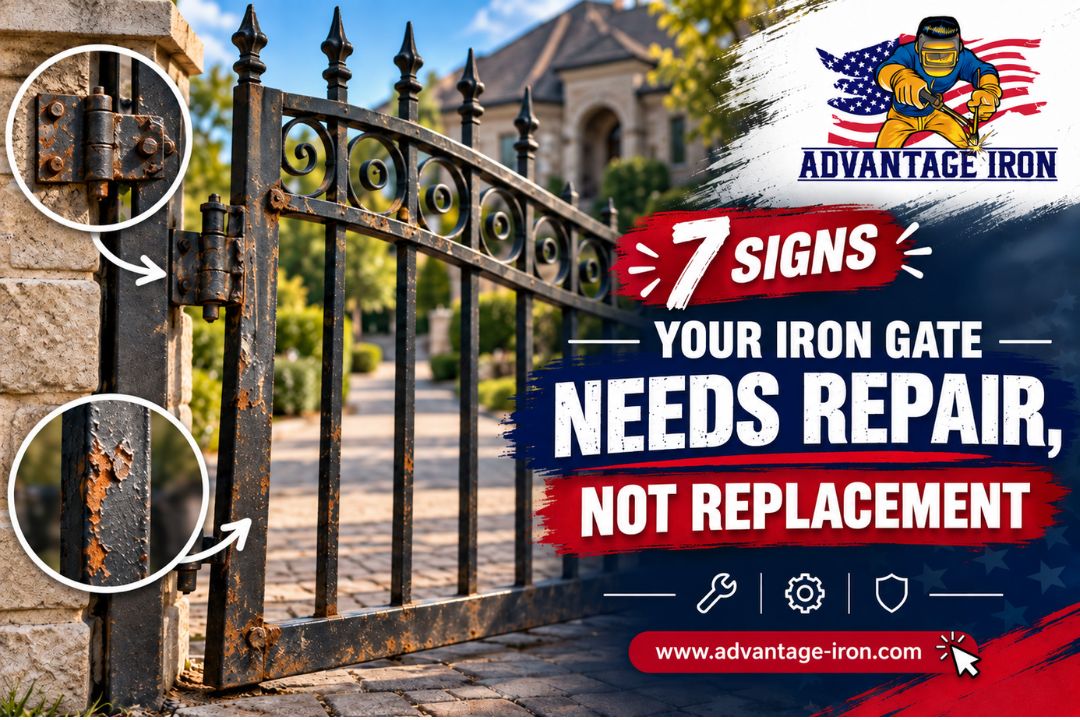
Quick Summary:- An iron gate does not need complete replacement every time it sags, rusts, squeaks, or stops operating. Repair is usually practical when the damage is localized and the main frame and posts remain structurally sound. Hinges, welds, latches, coatings, rollers, and automation components can often be repaired individually.
A damaged iron gate does not automatically need to be torn out and replaced. Many common problems including surface rust, worn hinges, broken welds, misalignment, and gate operator failures can be corrected through professional iron gate repair in Las Vegas.
Repair is generally the smarter option when the damage affects individual components but the gate’s main frame, posts, and overall structure remain solid. Replacement becomes more reasonable when corrosion or physical damage has weakened most of the system.
Here are seven signs your existing gate may still be worth repairing.
1. Rust Is Limited to Small Areas
Small rust spots around hinges, welds, bottom rails, and damaged coating are usually repairable when addressed early.
A professional can remove the corrosion, evaluate the remaining metal, complete any necessary gate welding repair, apply a rust-inhibiting primer, and refinish the affected area. Corrosion is the deterioration of metal through a chemical or electrochemical reaction with its environment, and controlling moisture exposure and coating damage can slow further deterioration.
Repair may be appropriate when:
- Rust is limited to the surface
- The metal has not developed deep holes
- Posts remain stable
- Structural rails retain their original thickness
- Corrosion has not spread throughout the frame
Replacement should be considered when rust has caused widespread section loss, perforation, or repeated structural failures.
2. The Gate Sags but the Frame Is Still Straight
A sagging gate often points to worn hinges, loose mounting hardware, an inadequately supported hinge point, or movement in the supporting post.
The gate may scrape the driveway, sit lower on one side, or fail to meet the latch correctly. These symptoms do not necessarily mean the entire gate is ruined. Sagging and dragging are commonly associated with hinge wear or alignment problems.
A driveway gate repair may involve:
- Replacing or reinforcing hinges
- Realigning the gate leaf
- Tightening or replacing mounting hardware
- Reinforcing the hinge post
- Adjusting the latch or gate stop
- Repairing a weakened weld
Replacement is more likely when the entire frame is severely twisted or the supporting columns cannot be repaired safely.
3. Hinges, Latches, Rollers, or Hardware Are Worn
Hinges, latches, brackets, wheels, rollers, chains, and guide assemblies wear faster than the main fabricated frame because they move every time the gate operates.
Common warning signs include:
- Loose or cracked hinges
- A latch that no longer aligns
- Damaged rollers
- Missing bolts
- Excessive movement around brackets
- A sliding gate that jumps or leaves its track
These components can usually be repaired or replaced individually. Replacing a complete custom gate because of worn hardware is normally unnecessary when the frame itself remains sound.
Regular iron gate maintenance, including inspection, cleaning, alignment checks, and suitable lubrication, helps prevent small hardware problems from placing additional stress on the frame.
4. One or Two Welds Have Cracked
A cracked weld should not be ignored, especially near hinges, latches, frame corners, or structural braces. However, one failed weld does not necessarily justify complete replacement.
Professional wrought iron gate repair may include removing the failed material, correcting the alignment, rewelding the joint, adding reinforcement, and refinishing the repaired area.
Repair is usually practical when:
- The damage is localized
- The surrounding metal remains thick and stable
- The frame has not suffered widespread fatigue
- The original gate can be realigned
- The damaged section can be safely reinforced
Repeated cracking in several locations may indicate poor fabrication, an undersized frame, excessive gate weight, unstable posts, or a deeper alignment problem. In that situation, replacing or rebuilding a major section may produce a better long-term result.
5. The Gate Is Noisy or Difficult to Move
Grinding, scraping, popping, or squeaking often indicates friction, poor alignment, dry hinges, worn rollers, debris in a track, or mechanical components under excessive stress.
These are usually repair symptoms not automatic replacement symptoms. Competitor repair guides also identify unusual noises and rough operation as early warnings of hinge, roller, track, or motor problems.
Do not continue forcing a heavy gate to move. Doing so can damage:
- Hinges and welds
- Sliding-gate wheels
- Tracks and guide rollers
- Latches and stops
- Automatic gate operators
- Supporting posts
Early metal gate repair is generally cheaper and less disruptive than waiting for a small movement problem to cause structural damage.
6. The Automatic Operator Fails but the Gate Is Structurally Sound
When an electric gate stops responding, the fabricated iron gate may be perfectly usable. The problem could be isolated to the operator or access-control system.
Possible causes include:
- A failing motor
- Damaged wiring
- Dead backup batteries
- Misaligned photo-eye sensors
- Faulty remote controls
- A damaged keypad
- Obstructions in the gate path
- Worn drive chains or gears
- A gate that has become too difficult for the motor to move
An automatic gate repair technician should first determine whether the problem is electrical, mechanical, structural, or a combination of all three.
Automated vehicular gates also require properly functioning entrapment-protection and safety equipment. UL 325 covers safety requirements for residential and commercial gate operators, including protection against entrapment hazards.
Never bypass safety sensors simply to make an electric gate operate.
7. The Gate Looks Worn but Remains Structurally Stable
Peeling paint, faded coating, minor dents, surface scratches, and outdated decorative details can make an iron gate look worse than its actual structural condition.
When the frame, posts, hinges, and main rails remain stable, restoration may be more sensible than replacement.
A custom iron gate repair or ornamental iron gate repair project may include:
- Removing loose paint and surface rust
- Repairing minor dents or bent components
- Replacing decorative pieces
- Restoring broken scrollwork
- Repairing welds
- Preparing and refinishing the surface
- Updating locks, latches, or automation
This can restore the gate’s appearance while retaining the original fabrication.
Repair vs. Replacement: Quick Comparison
Gate Condition | Repair Is Usually Practical | Replacement May Be Better |
Rust | Localized surface corrosion | Widespread holes or metal loss |
Alignment | Worn hinges or minor sagging | Severely twisted frame |
Welds | One or two repairable cracks | Repeated failures across the gate |
Posts | Loose but reinforceable | Severely corroded or unstable |
Automation | Motor, sensor, or wiring issue | Gate design is unsafe or incompatible |
Appearance | Fading, scratches, minor dents | Extensive damage across most sections |
Cost | Repair solves the root cause | Multiple major systems require rebuilding |
Common Gate Repair Mistakes
Painting Directly Over Rust
Paint does not repair weakened metal. Rust should be removed, the remaining steel assessed, and the surface properly prepared before refinishing.
Replacing the Motor Without Checking Alignment
A new motor will also struggle if the gate drags, binds, or has damaged hinges.
Welding Without Correcting the Cause
A cracked weld may fail again when gate weight, post movement, or poor alignment caused the original damage.
Waiting Until the Gate Stops Working
Delaying repairs can turn a replaceable hinge or small weld repair into frame, post, or operator damage.
Choosing Repair Based Only on Price
The cheapest patch is not useful when it does not address the underlying structural problem.
Expert Tip: Request a Complete Gate Inspection
Before approving repair or replacement, ask the contractor to inspect:
- Gate frame and structural rails
- Hinges and mounting plates
- Posts, columns, and footings
- Welded connections
- Latches and locks
- Sliding tracks and rollers
- Gate operator and controls
- Safety sensors
- Coating and corrosion
- Clearance and alignment
A good estimate should explain the cause of the failure, what can be retained, which components need repair, and whether the proposed work offers a reasonable long-term solution.
Schedule Iron Gate Repair in Las Vegas
A sagging, rusted, noisy, or unresponsive gate does not always require complete replacement. The correct repair can restore security, appearance, and reliable operation while preserving the parts of the gate that remain structurally sound.
Advantage Iron provides custom fabrication, welding, gate restoration, and gate repair in Las Vegas for residential and commercial properties.
Contact Advantage Iron to have your gate inspected and receive a clear recommendation based on its actual condition not an automatic replacement sales pitch.
Frequently Asked Questions
Usually, yes, when the damage is limited to hinges, welds, hardware, coatings, alignment, or automation components. Replacement becomes more economical when most of the frame or supporting structure requires reconstruction.
Often. Repair may involve hinge replacement, post reinforcement, frame realignment, new mounting plates, or additional structural bracing.
That depends on how much solid metal remains. Surface corrosion can often be repaired, while widespread holes and significant material loss may require section replacement or complete reconstruction.
Automatic gates may require both metal fabrication expertise and qualified gate-operator service. The physical gate, hinges, alignment, motor, sensors, and electrical system should be evaluated together.
Repair is usually appropriate when the problem is localized and the main structure remains sound. Replacement is more appropriate when damage is widespread, safety is compromised, or previous repairs repeatedly fail.